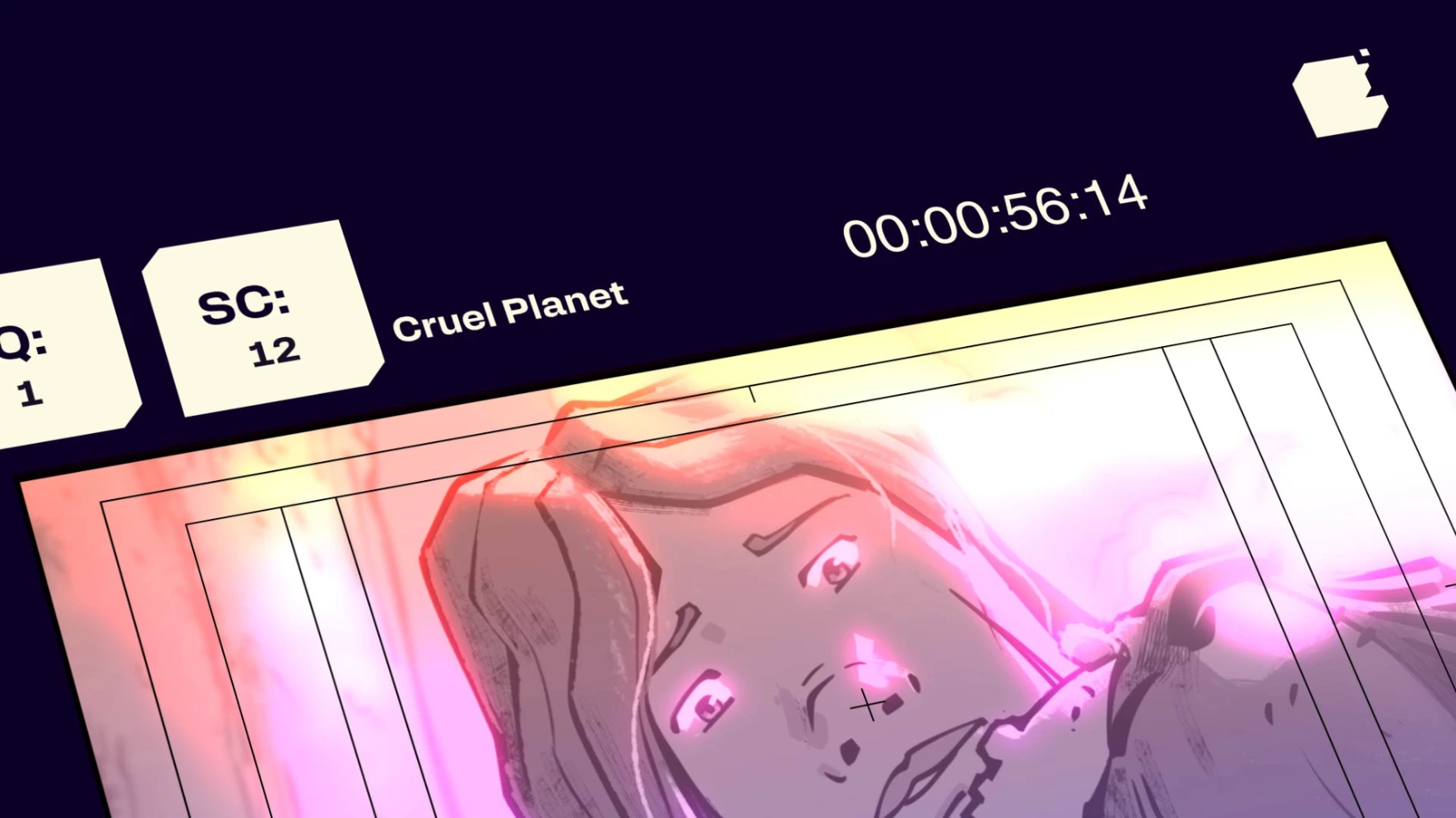
"Cruel Planet" refers to a hostile place, full of dangers and survival situations. Abrupt actions, forced gestures, camera movements, and angle changes, rhythmic and musical harmony are everyday occurrences for those who decide to animate on this cruel planet. With the script in hand, the meticulous creation of a storyboard and its animatic is mandatory.
Storyboard: What, Where, and the Visual How
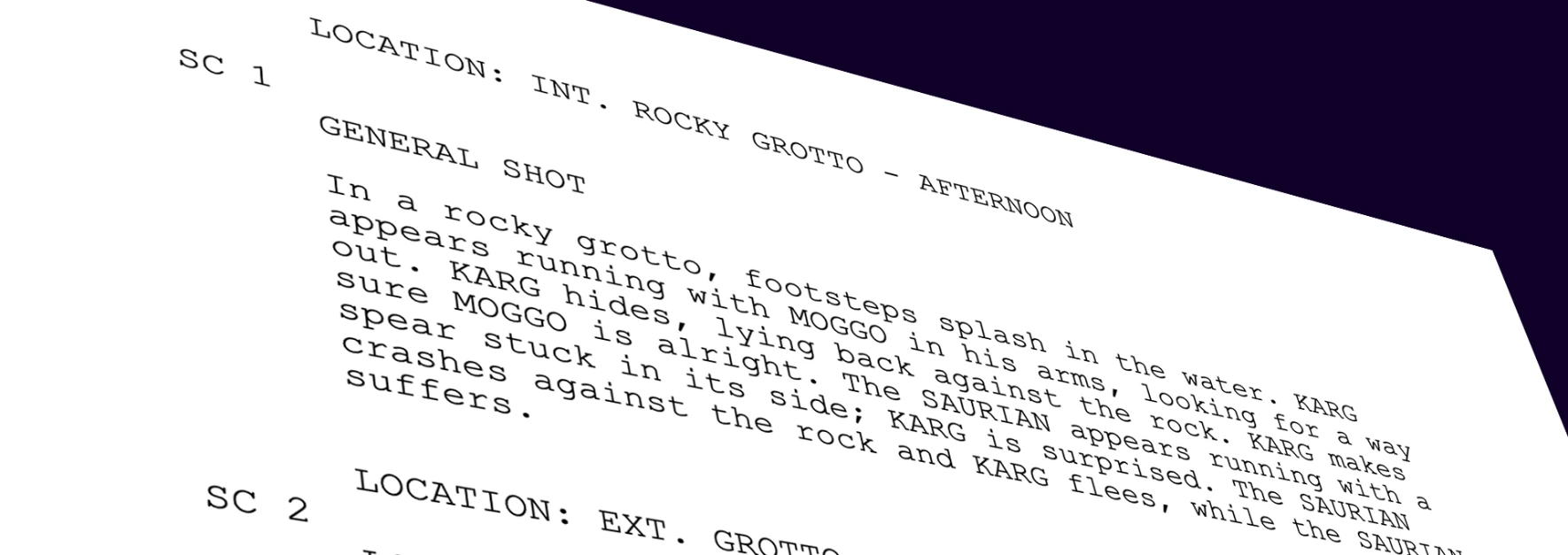
The script of an animation project is comparable to the novel of the same: we have a theme, a plot, dialogues, and descriptions of images and sounds. However, it is insufficient to jump into a production phase. First, we must create a storyboard.
It consists of breaking down the script into images to compose them into a series of sequential images (like in a comic), with simple, quick but contrasted drawings and full expressive intent. Indicating angles, shots, camera movements, number of elements per scene, backgrounds, lights, and shadows.
With this static version, we can preview what our animation will be. Plan with fewer words and more images.
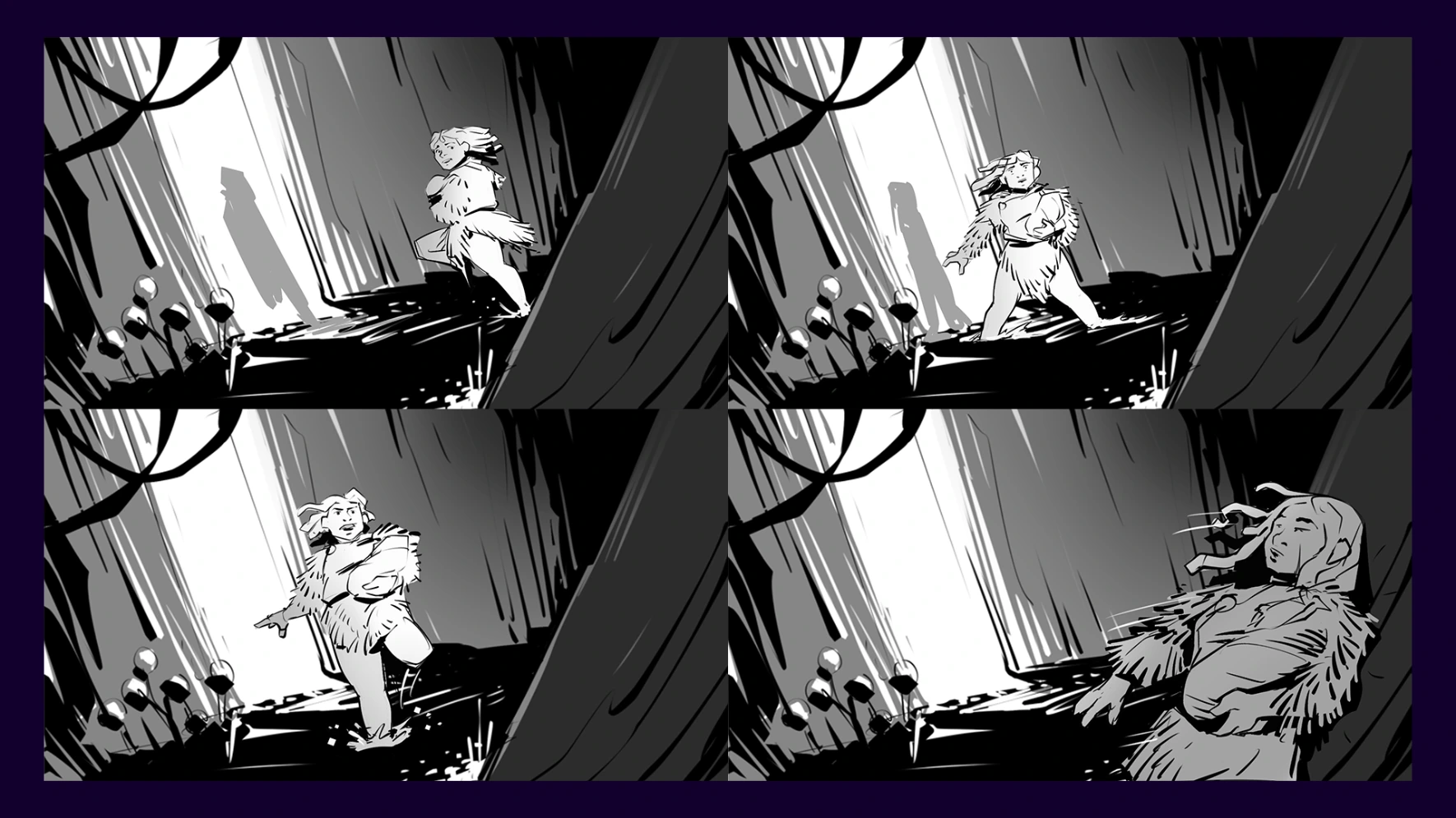
In "Cruel Planet", we seek not only a dynamic chase between the protagonist and the captor but one that integrates with the primitive and hostile setting, transitioning from a closed space to an open, increasingly ominous one. For all these elements to merge, the camera acts as a vehicle: dragging characters and backgrounds in a rollercoaster of emotions.
We save time and money by avoiding verbal interpretations, synchronizing the entire team and clients in a common language: the storyboard, where we can experiment with scene proposals without compromising the project. It's better to correct a few frames involving several actions than one second of animation.
Do you know what you're telling? Where do these actions take place? How will your story look?
Without a Storyboard, production is likely to descend into chaos: constant and unnecessary reinterpretations, continuity errors, bottlenecks, and slow communication.
Animatic: When and How of Movement
We haven't moved to the production phase yet, but we have a plan and need to give it a duration in time and articulate the movement of our static frames. For this, the next step is to create an animatic.
Continue the work of the storyboard by giving it duration and narrative rhythm, synchronizing sound with images. For artists, this is essential; the animatic is a timer, from camera movements, gestures, and, very important, the lip sync (synchronizing the VO with the images).
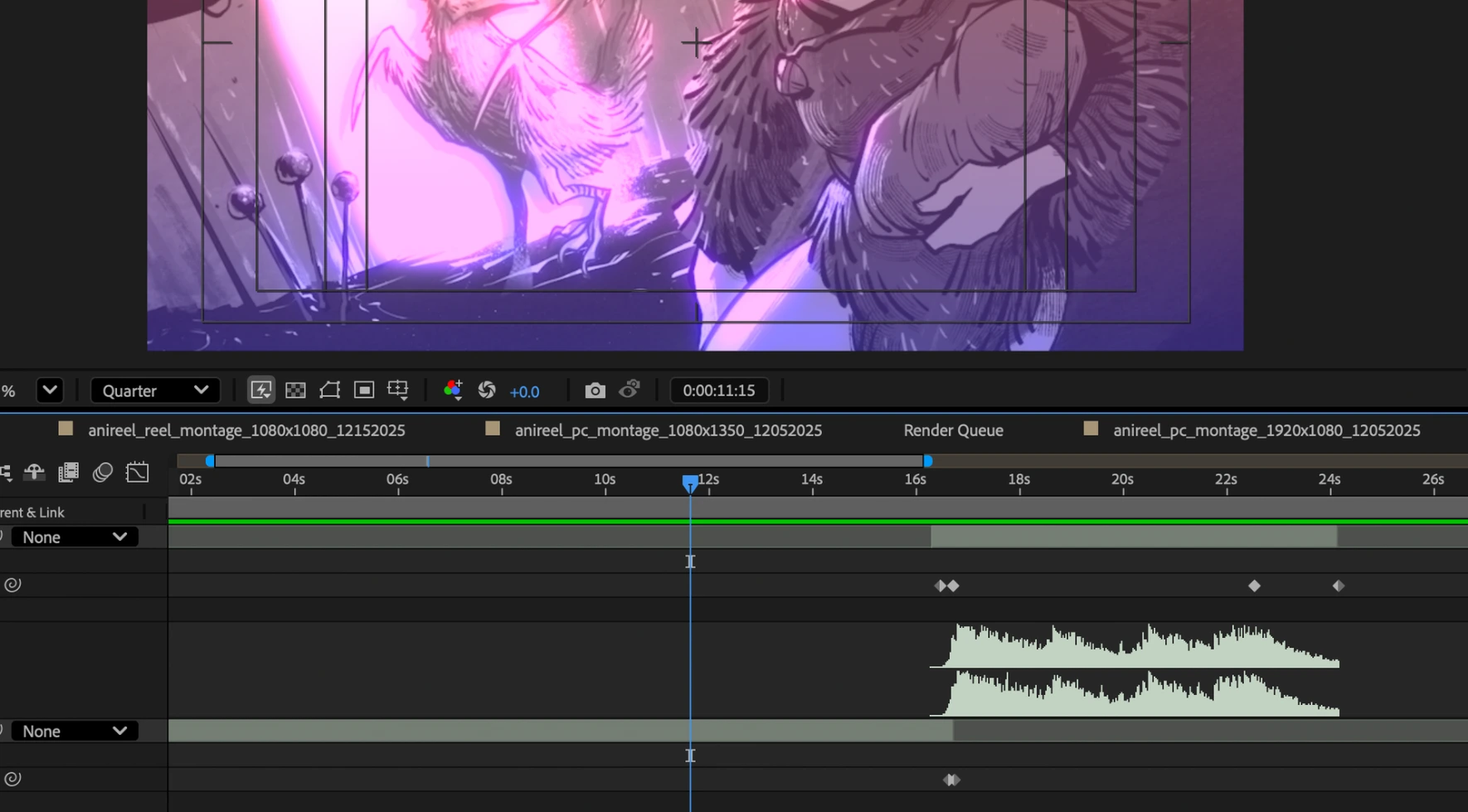
"Cruel Planet" involves constant emotional shifts: from danger to tenderness, from tenderness to omnipresence, and back to danger, to tenderness... This creates different rhythms. But this is just one level, as there is also the music, which complicates the piece. Real life tends to be simpler, but in animation and art, challenging ourselves with these intricacies transcends life itself.
This is the last vision of the project before entering the animation phase. Here, we can still correct, test new durations, adjust intentions, and detect continuity errors; a space where editing can experiment.
An animation work without an animatic is like an orchestra where the musicians can't see the conductor during the concert.
Do you already know when and how your actions occur?