
When we talk about children, the development, learning of basic concepts, positive values, and motivations to participate are the pillars of all children's animation. It seems easy, simple, and obvious, but synthesizing all these pillars requires a special touch, a mind capable of teaching, entertaining, and motivating with few resources, not due to budget but for effectiveness.
"Sid's Map" is a children's animation project that aims to teach ecological values through the adventures of Sid: a little seed that travels the small big world, helping other creatures and learning from them.
Visual Design
The characters should have simple and rounded shapes, with exaggerated features and expressions. They should stand out from the backgrounds, which should be less distracting.
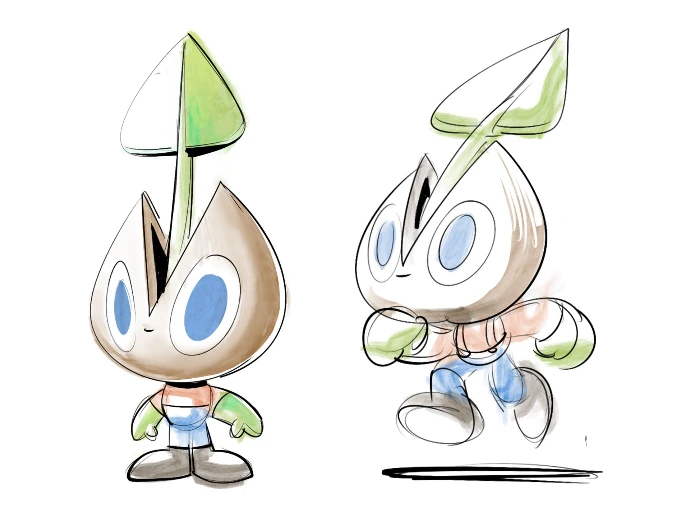
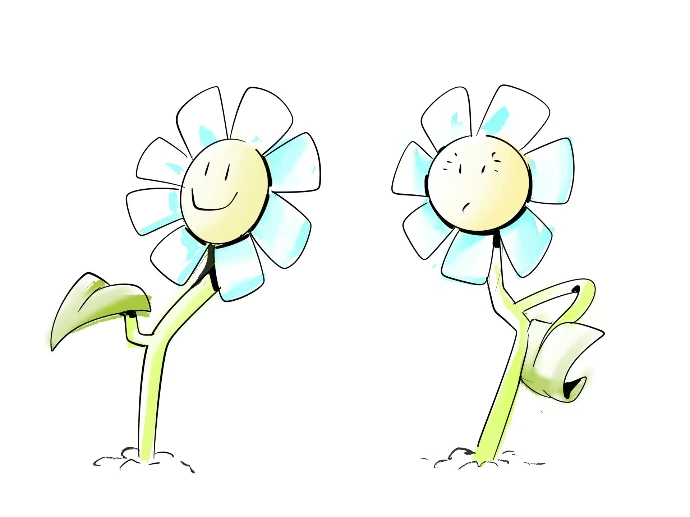
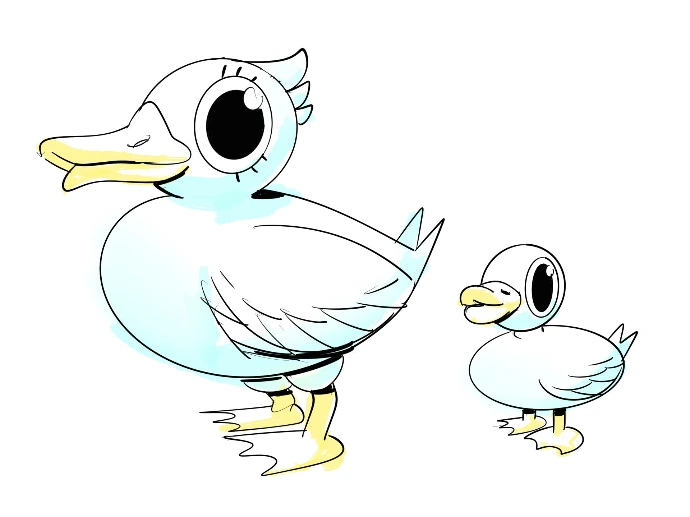
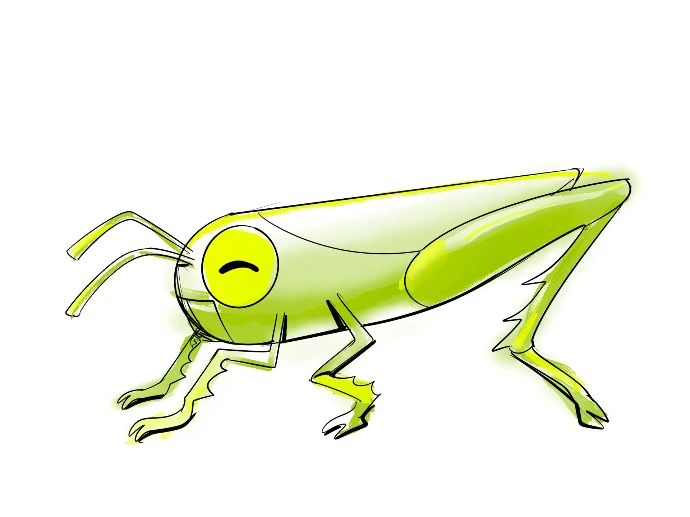
Using fantasy is essential to stimulate identification through imagination. Resources like animals, objects, or plants as anthropomorphic characters amplify this resonance between the developing child and the world.
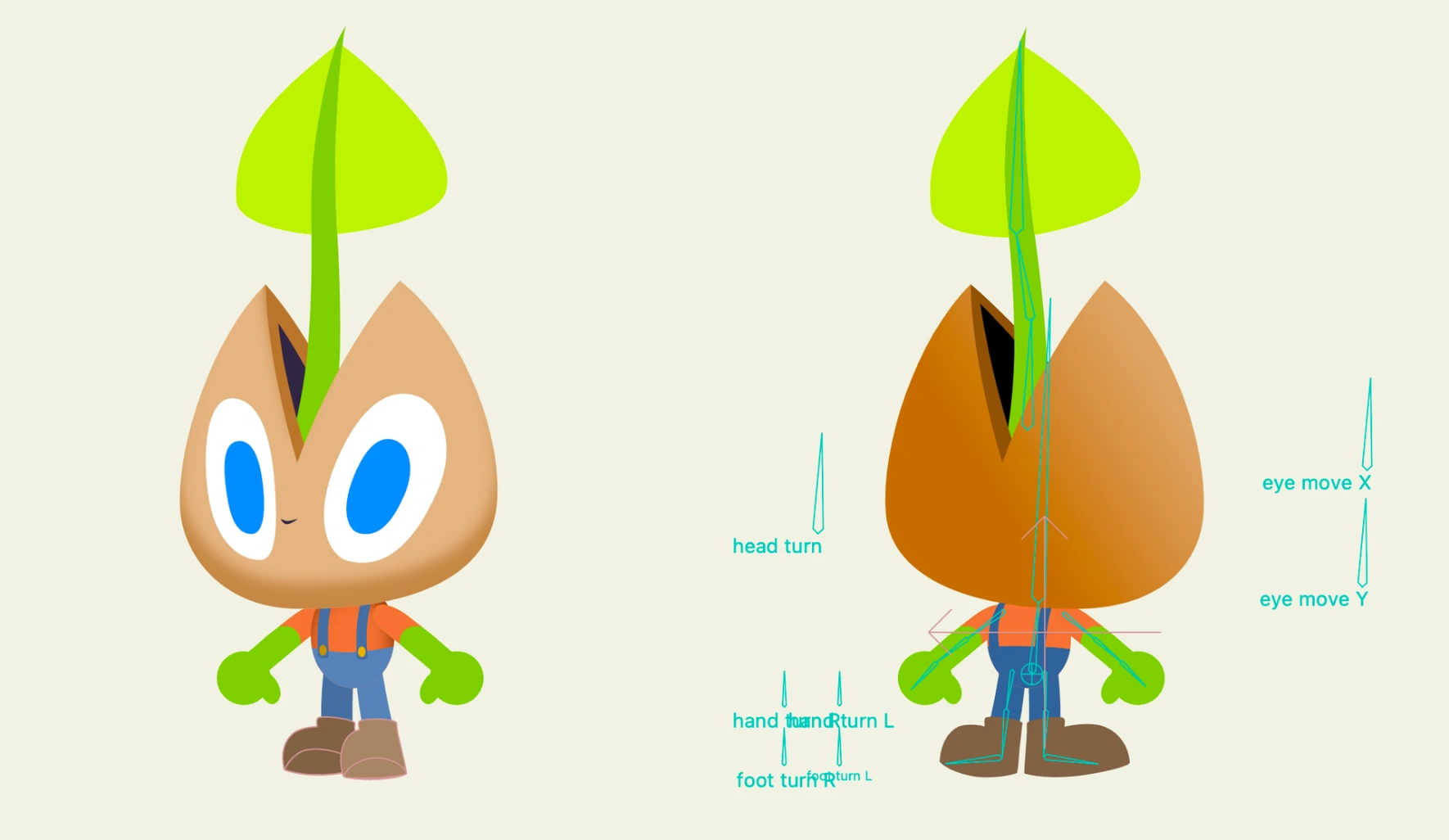
For "Sid's Map," we wanted to create characters that represent nature, with a protagonist that is a little seed with a small sprout, symbolizing growth and the desire to live. We designed the characters using Illustrator and Moho, and rigged them in the latter in vectors. Vectors are ideal for children's projects as they offer clear, smooth, and easy-to-manipulate shapes.
Motion Design
Children's animation should be dynamic, but not abrupt or chaotic. An excess of visual or auditory information can quickly cause children to lose attention. Overly elaborate camera movements and angle changes may not be as effective in conveying the message and can also represent an unnecessary cost. It's important to avoid abrupt cuts in editing, as each scene needs to be "digested" by the young audience.
Physical humor is a means to send messages, with gentle falls, somewhat absurd situations, silly jokes, or funny sounds.
Smooth yet emphatic movements bring scenes to life without overwhelming them. We often synchronize group actions to emphasize messages of cooperation. We use gentle camera movements, even a slight parallax, to create a 3D illusion.
Didactic Narrative
Rely on: a linear narrative, a clear structure, and a single problem per episode.
Characters with defined roles or personalities are easier to identify, whether by their attitude or appearance.
Simple dialogue writing, with positive messages that invite children to engage with the world through physical activities, stimulating curiosity and sensitivity:
- These values can range from learning amoral concepts like colors, numbers, words, to moral ones: cooperation, friendship, respect.
- Reinforce messages with pattern repetitions, whether catchy phrases, songs, or funny gags.
- Avoid complicated ambiguities, irony, and adult dialogues, as well as messages that encourage sedentary behavior and passive contemplation. At the end of the episode: let's play!
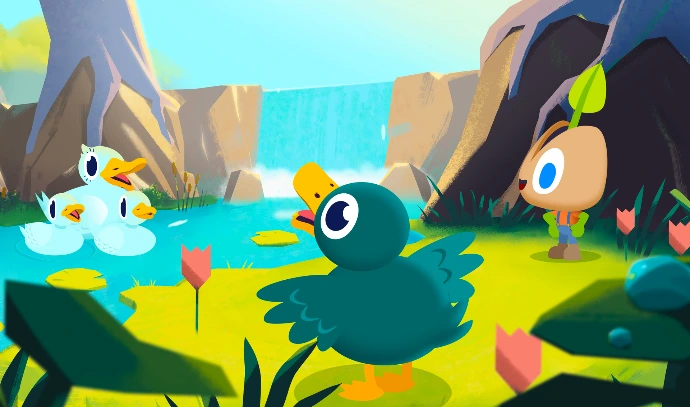
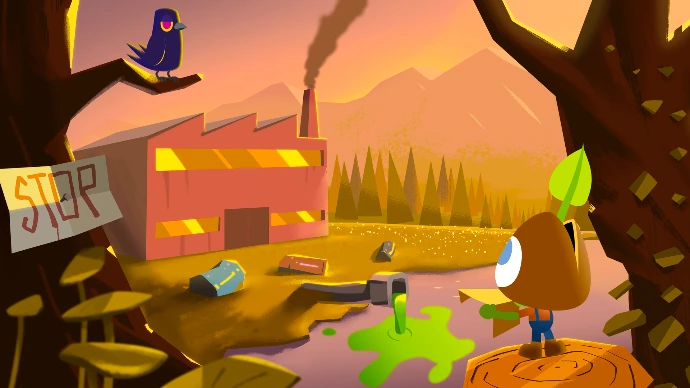
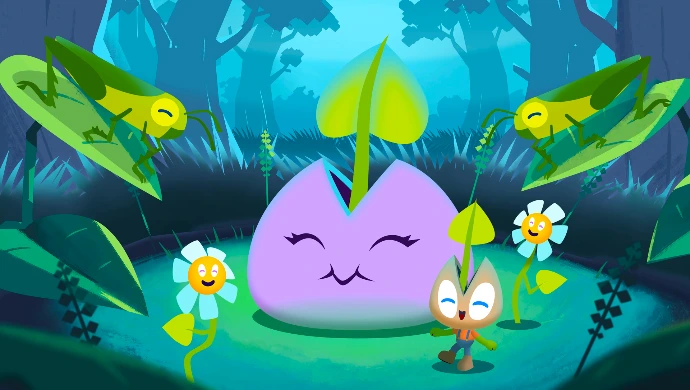
We wanted a clear and powerful narrative. A play of sizes between the small and the large, with anthropomorphic plants and animals, distinct from the vast human world. This offers us a broad playground, generating a sense of the world's immensity and everything it contains, yet different in its daily life, hidden or on the margins of the human world.
With the intention that at the end of each episode, a new bond is created between humans and nature, which may be evident to an adult, although we doubt it.